Once in a while the debate pops up that some country should re-gauge its railways – Finland being the most recent example. In this blog post I am going to delve into this issue, and explain why – in most cases – it does not make sense.
But first let’s make sure we all understand everything correctly.
In Europe there are three main rail track gauges* – 1435mm standard gauge (used in all of central and western Europe), 1668mm (used in Spain and Portugal), and 1520/1524mm (used in the Baltics, Moldova, Ukraine, Finland). Standard gauge is also used in the United States and China, 1520mm in all of the former Soviet Union.
When a train needs to cross from one system to another – a so-called “break of gauge” – passengers and freight either have to be moved from one train to another, the wheels on the train replaced with ones of the other gauge, or a gauge-changing train used.
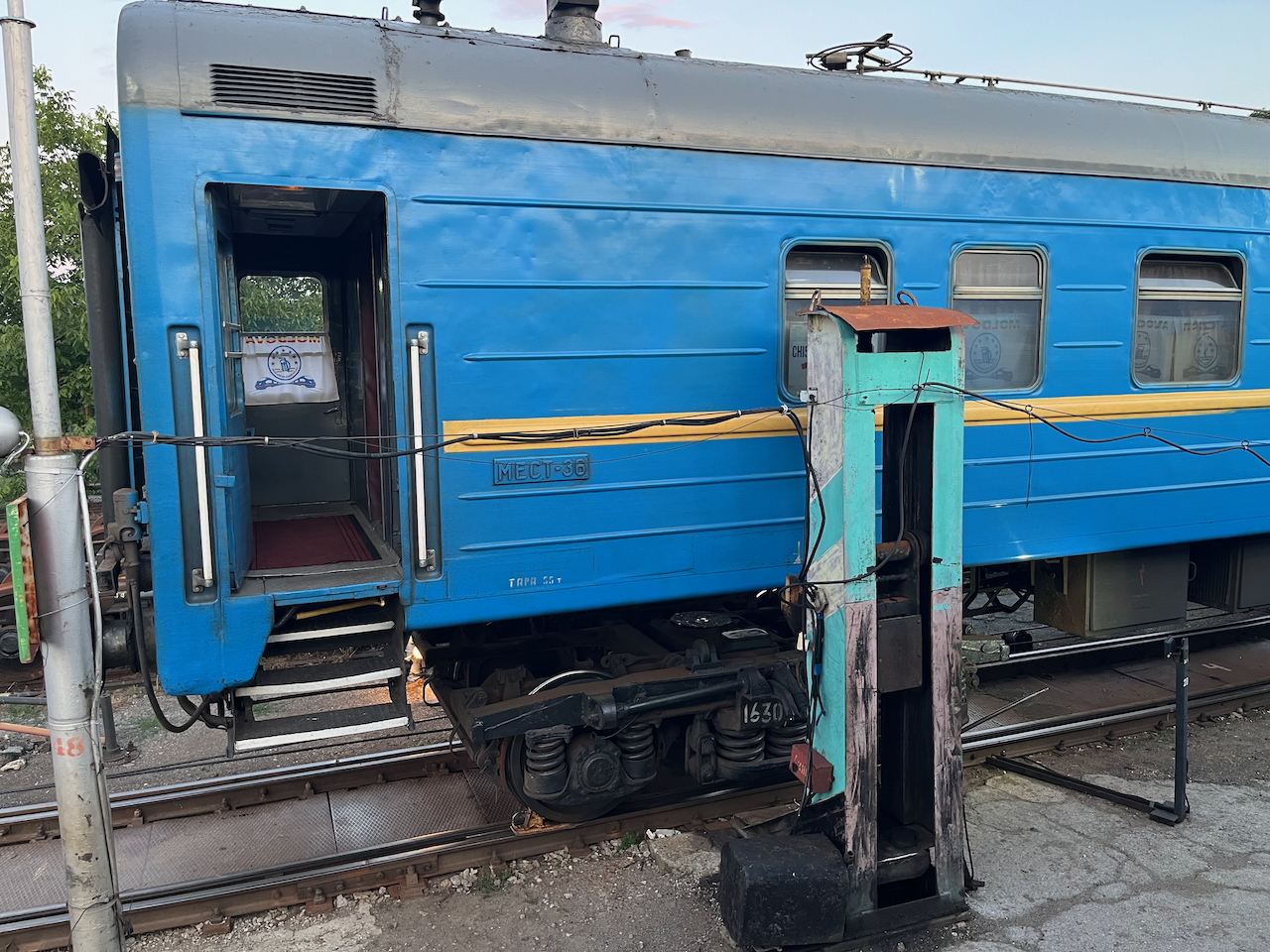
So idea of re-gauging is simple enough: rather than the mess at a break of gauge, why not change the tracks to allow trains to run through to their destination using one system.
But here too it is not always so obvious.
What does “re-gauge” even mean?
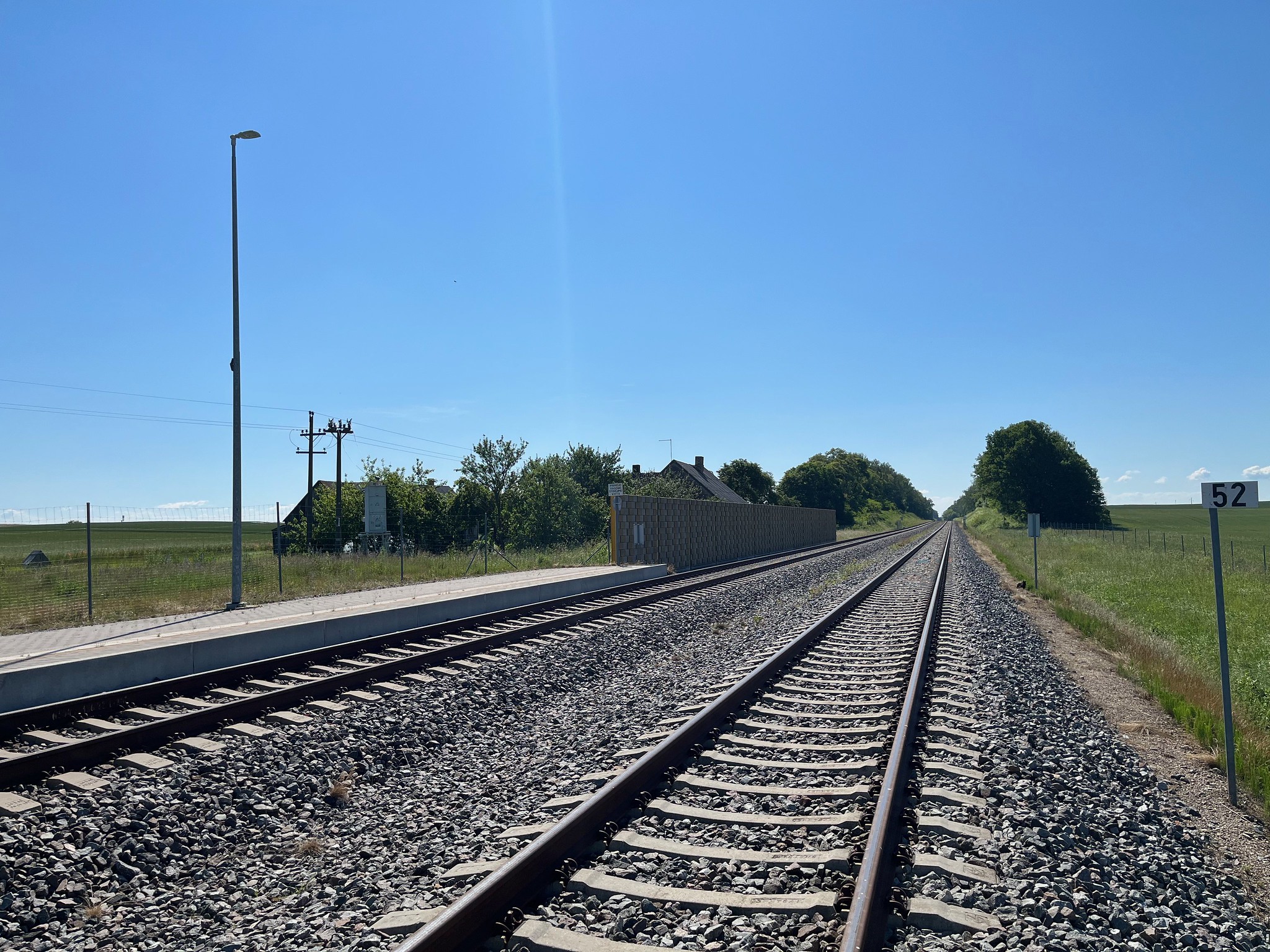
The “re-” in the term implies replacement – replacing the broad gauge tracks with standard gauge ones. But that is only one option. You can also lay standard gauge tracks in addition to broad gauge tracks, as is shown here in Naujiena in Lithuania:
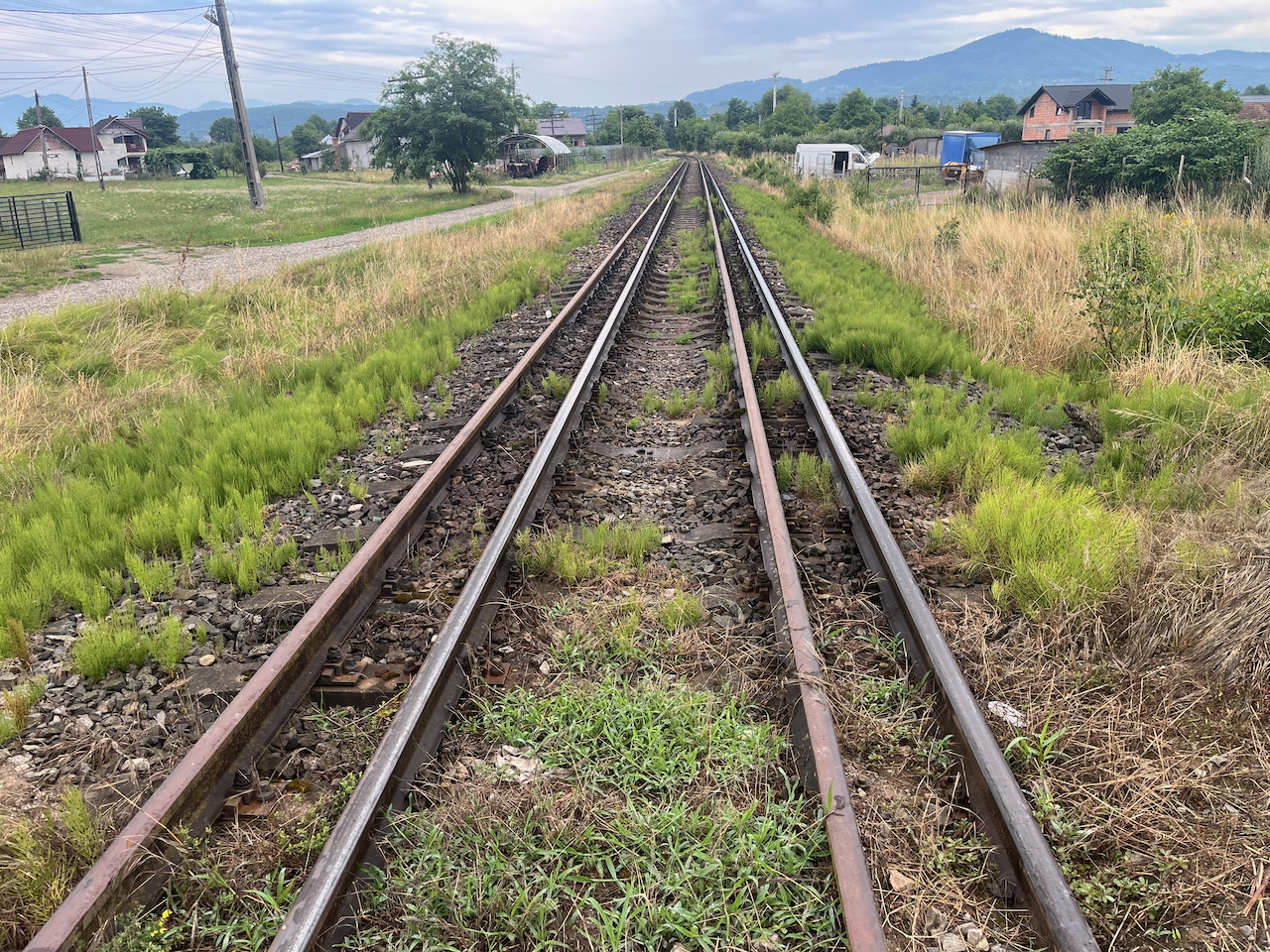
Or dual gauge track can be laid – as a space saving measure, like this at Sighetu Marmației, Romania. From the left, the first and third rails are 1520mm broad gauge, the second and fourth rails are 1435mm standard gauge:
So we have three options: re-gauge the tracks (replacing one gauge with another), lay another gauge tracks in addition, or lay dual gauge tracks.
So let’s then try to work out what might make sense to do.
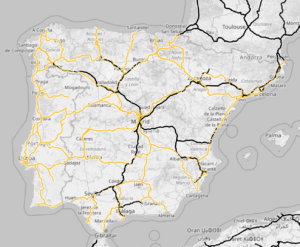
Spain is the European country that has the most experience in the modern era with tracks of two gauges – its new high speed network is 1435mm standard gauge, while all its old lines are 1668mm. It has mostly laid another gauge tracks in addition. But while this means high speed trains can run from Barcelona to Perpignan in France without a break of gauge, trains from Madrid to Gijón or Vigo have breaks of gauge en route, and require dual gauge trains for operations. Spain has moved the problem from its border with France to a dozen places within the country instead. Spain has about 11000km of broad gauge lines, and 3500km of standard gauge lines – there is a long way to go to standardise all of this, and Spain has been working on this for thirty years.
Portugal – despite using 1668mm like Spain – is currently not planning any standard gauge tracks, and is even contemplating building a new 1668mm high speed line between Lisboa and Porto. As trains using that line would run on old lines for part of their route, Portugal reasons this would reduce complexity and avoid breaks of gauge, and re-gauging the whole network is too costly.
Rail Baltica is a standard gauge rail project that will connect Warszawa with Tallinn via Kaunas and Riga, with a spur to Vilnius. Poland is standard gauge already, and the rest of the line will be built in addition to the broad gauge lines in Lithuania, Latvia and Estonia, with no plans for through running from standard gauge to broad gauge. Estonia and Lithuania are even upgrading and electrifying some of their broad gauge lines. But as the main purpose of Rail Baltica is to get freight and passengers to central Europe, a standard gauge additional line is a good decision.
But beyond that it gets tricky.
Finland has one railway line with a break of gauge – to Haparanda in Sweden that is standard gauge. While this line might have some freight and military-strategic potential, it is more than 800km from Finland’s centres of population in the south of the country. Building a standard gauge line in addition to broad gauge lines as far as Oulu or Rovaniemi (the two main centres in the north) might make sense, but any re-gauging of Finland’s lines in the north brings different problems – passenger trains from the south would then face a break of gauge somewhere along their route.
The conundrum is similar for Ukraine. The role of the railways in the war effort has shown that the country has a reliable and functional railway, and works to re-gauge lines would cause considerable disruption. Ukraine has just opened a new additional standard gauge line from Chop to Uzhorod in the south west, and already has dual gauge track between Chop and Mukachevo. Building an additional standard gauge track (or laying dual gauge track) between the Polish border at Przemyśl and Lviv could be a meaningful next step, but obviously this should not be done in a way that would prevent running from Kyiv to Przemyśl using broad gauge as well if you need to. You do not want to move the problem of the break of gauge from Przemyśl to Lviv! Putting it another way: do not let the gauge question break or add additional complexity to something that works well enough at the moment.
The situation in Moldova is slightly different. The line from Ungheni (at the border to Romania) to the capital Chișinău is the most important in the country, but is in a dreadful state – speeds are 30km/h on many sections. So it needs a full re-building anyway, and given that, laying dual gauge track – thereby allowing standard gauge trains to run Chișinău – Iași – București, and broad gauge trains to run Chișinău – Ungheni – Bălți (given northern Moldova and onwards to Chernivtsi in Ukraine is not going to be re-gauged) – would make sense.
We also ought to ask at this juncture: are there any other ways to solve these problems?
For freight at the 1435mm/1520mm break of gauge there are transshipment terminals, like this one at Šeštokai, Lithuania where goods are arduously shifted from one train to another:
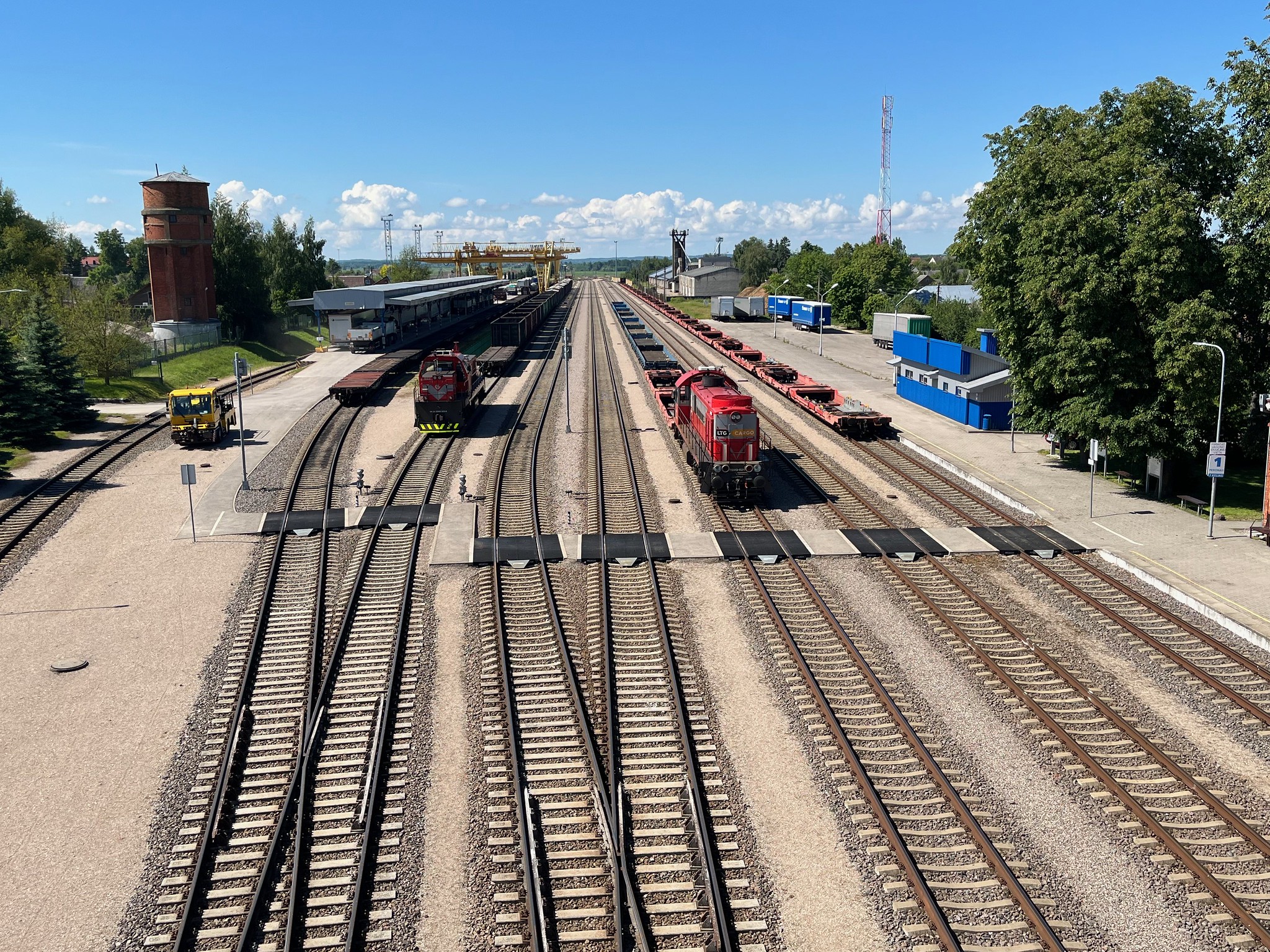
These terminals could be sped up by using containers for freight, rather than bulk hoppers – the Austrian firm Innofreight has been a leader at this. Shifting containers from one train to another is a lot faster and cheaper than moving the aggregates, metals or chemicals directly. SUW 2000 is also a low cost dual gauge freight bogie system. These freight solutions could likewise be deployed for the transport of military supplies.
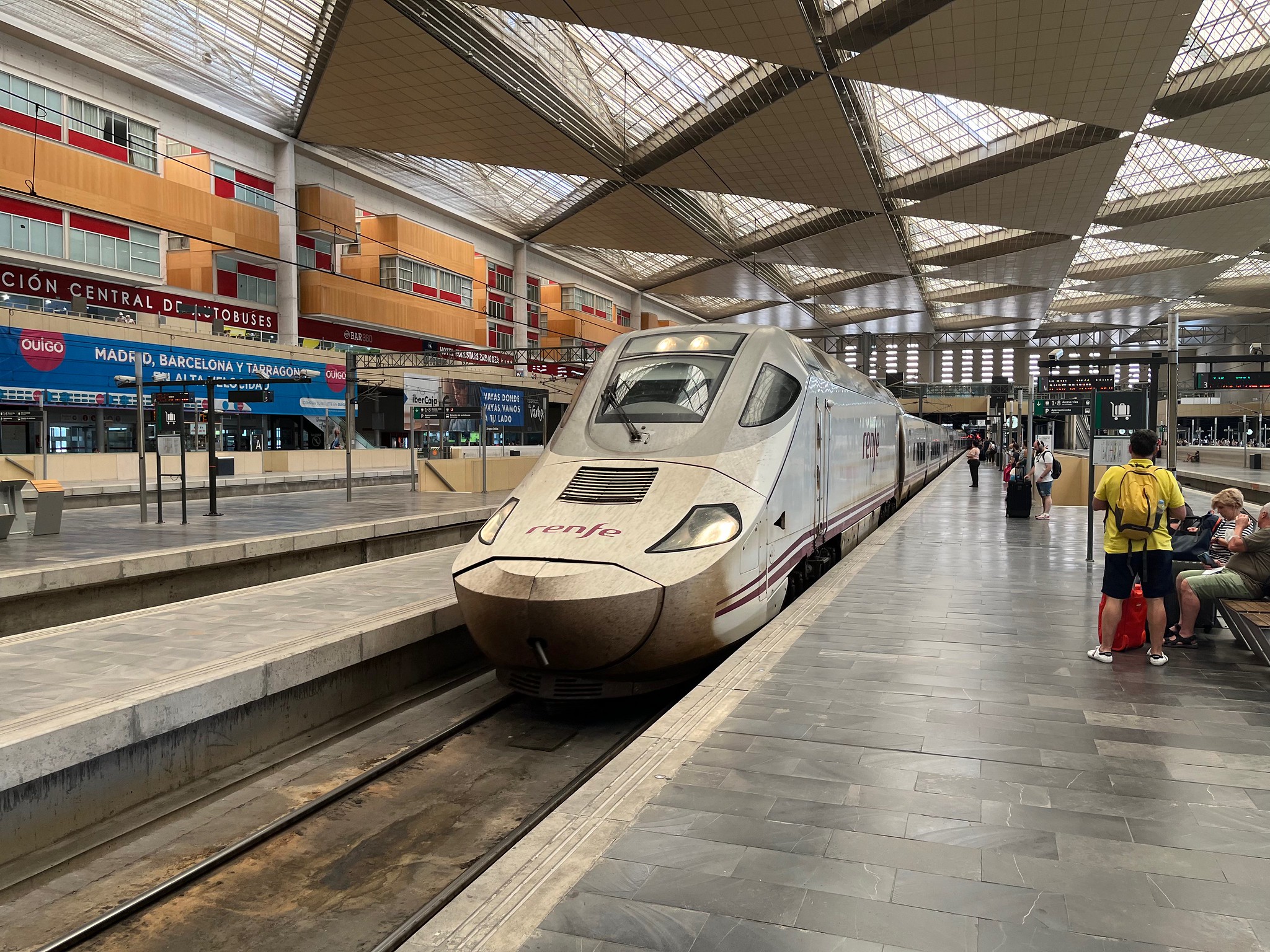
For passenger trains, dual gauge trains are cheaper and easier to deploy than going through the long process to re-gauge lines or lay additional tracks. Spanish manufacturers CAF and Talgo (shown here in Zaragoza) are leaders in this:
And last but not least, what about the danger of invasion?
The fear that Russia – with the same rail gauge as Ukraine, Moldova, Finland and the Baltic States – could easily use railways to invade has been a sort of geo-strategic driver for this re-gauging debate. But here too there is an alternative: dynamite. Rather than spend billions re-gauging railways, simply be ready to destroy the sections of railways at your border to prevent invasion that way. It might be brutal to detonate a few kilometres of railway, but it is a much cheaper way of preventing Russian trains crossing your border than re-gauging your own railway is!
So there you have it. In Europe I cannot see any case for wholesale re-gauging of railways (the replacement of broad gauge with standard gauge). In a few places, mostly close to borders, some additional standard gauge lines or laying dual gauge tracks, might make sense – particularly in cases where existing infrastructure is decrepit. But anything more than that is costly and disruptive, and can just shift the break of gauge problem from one place to another. And – with dual gauge trains and containerisation of freight available as alternatives – the case for re-gauging is weaker now than it has ever been. Last but not least, if you want to prevent invasion, be ready to detonate your tracks.
* – yes, the island of Ireland uses 1600mm, but as it has no connection to any other railway we can leave that out for the moment. And many countries have other narrow gauge lines. Those are niche cases that don’t concern us here.


Hello! Thanks for the article and your work more generally.
Indeed it’s hard to see how regauging would be worth it from a practical or economical perspective. I’m not sure I completely buy that dynamiting a few kilometres of border railway has quite the same strategic impact than regauging the whole network though: it’s inherently riskier to start (you have to assume that in case of invasion you’ll be able to actually pull it off), and the Russians could rebuild that stretch especially if the frontline stabilises somewhat away from the border (as is the case for perhaps half the original frontline in Ukraine).
Whether it’s “worth it” depends on a lot of assumptions about the likeliness of the different scenarios, but doesn’t seem so trivial.
in a non European, historical context, there was the regaugeing that occurred in the southern US during and after the Civil war. confederate territories tended to have broad gauge, union standard.
wartime regauging tended to be urgent rebuilding post destruction to enable whichever side that needed to railway to connect to what existed rearwards in their supply chain.
post war overnight standardisiation in 1886 to standard, with obvious political and economic benefits to the union.
I think your analysis is variously amplified by that history, not sure there is any contrary points that the history would suggest.