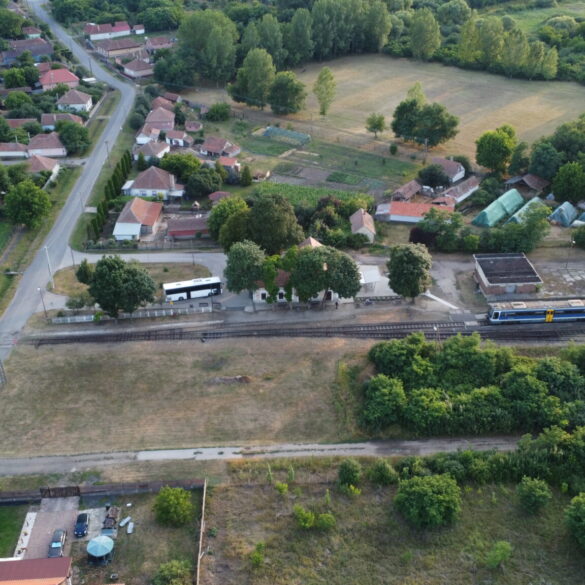
The latest setback in the entry into service of the new Régiolis fleet for France-Germany cross border services: now there is a problem with the emergency brakes, Le Republicain Lorrain reported yesterday. While the trains are OK to operate in France, but they do not respect the standards on the German side of the border. N-TV and SR then jumped on this in German.
The problem is not actually with the brakes. It is with the reporting. This is not news!
The issue has been known at least since 17th October 2024. Yes, more than a year ago.
In this PDF from the Baden-Württemberg Transport Ministry (that I was pointed towards this on Bluesky), replying to a parliamentary question, the problem is already outlined:
Es wurde jedoch eine Nichtkonformität des Bremssystems für das deutsche Eisenbahnnetz festgestellt, die eine Zulassung des Zuges nicht zuließ. Angesichts der erforderlichen Untersuchungsfristen, die zu einer vollständigen Zulassung des Zuges erst 2025 führen würden, wurde der Zulassungsantrag in zwei Teile aufgeteilt. Für Frankreich erhielt der Zug im Oktober 2024 seine Zulassung. Für Deutschland steht die Zulassung noch aus und wird bis zum Sommer 2025 angestrebt.
My translation:
However, a non-conformity of the braking system for the German railway network was identified, which prevented the train from being approved. In view of the necessary investigation periods, which would not lead to full approval of the train until 2025, the application for approval was split into two parts. The train received its approval for France in October 2024. Approval for Germany is still pending and is expected by summer 2025.
So the issue is not that there is a problem. The issue is why it has not been fixed, given it has been known for at least 13 months. And summer 2025 is now behind us.
This is the latest stage in this sorry story of the Régiolis trains for cross border services, one I dug into a lot last year. Here is my initial investigation, and the follow up. Even if we could work out how serious this brake problem is, how strong is the incentive to really fix it? We still do not know how these trains are to be operated, cross border, because the tender for the operation of the services has still not been awarded, and will not start until December 2027. A technical reason – those pesky German brake standards – to mask what is a very political problem suits everyone rather well.
[UPDATE 6.11.2025, 12:45]
I was asked by a friend why CAF*, the manufacturer, has not faced financial penalties for failing to build a train that is compliant with the requisite technical standards – as that would be the normal procedure in these cases. But these trains were bought as part of the 2009 framework contract between Alstom* and SNCF for the supply of trains to the French Régions. So it would be Grand Est that would then push for these penalties. But why would they? The current situation suits Grand Est just fine – they have this fleet of 30 new trains all to themselves, and they do not see eye to eye with the three neighbouring German Bundesländer about eventual operation cross-border. If approval of the trains drags, why does Grand Est care? In short: this looks like CAF incompetence, Grand Est lack of incentive to fix the problem, and the Bundesländer with the incentive to fix it but lacking the means to do so.
.
This is worse than I thought. In the 12:45 update yesterday, I assumed that CAF* would have the responsibility for approval of the rolling stock with the EU Agency for Railways – as that’s how it normally works. But no, France is always different. As you can see from the fiche from ERATV for these trains (you need Authorisation document reference (EIN) EU8020240231 if the direct link doesn’t work), it is not CAF but SNCF Voyageurs SA (Direction TER) (see 3.1.3.4.3.1) responsible. This is because SNCF has traditionally taken incomplete vehicles from manufacturers, and has installed some components themselves – and that means it is SNCF, and not CAF, that is the type authorisation holder**. And who has the lowest incentive of all to fix this problem? SNCF. Because they are the ones most opposed to the competitive tendering approach being pursued by the German Bundesländer. And – as if that were not enough – the brakes problem is actually a CAF problem, technically (they design and install the brakes, not SNCF), not a SNCF problem – although SNCF has to verify compliance.
So – to get this clear – it looks like CAF made an error with the brake systems in the trains, SNCF would have to get CAF to fix this problem (that they have a low incentive to do) and SNCF then has to seek authorisation from the EU Agency for Railways for the Régiolis to run in Germany. Grand Est has a low incentive to push SNCF to get this done, as they too are not keen on the competitive tendering, and happy the extra trains are running . And the three German Bundesländer have no leverage over CAF, SNCF or Grand Est to make any of them act.
.
Thibaud Philipps, Vice President of Grand Est, has spoken to France 3 about the issue, and it just muddies the waters further. The full story is here, and this is the key paragraph – including the original links:
“Malgré l’élaboration commune du projet, des normes ont évolué côté allemand entre-temps”, se désole Thibaud Philipps, vice-Président du conseil régional du Grand Est en charge de la mobilité et des transports. En 2024, Berlin a été confronté à plusieurs accidents spectaculaires, dont un déraillement d’un train régional avec 200 personnes à son bord. Résultat, en novembre 2024, l’Etat fédéral a brusquement fait modifier les règles encadrant le freinage d’urgence. Un système différent du français, utilisant des patins électromagnétiques. “Nos homologues des Länder concernés ont été aussi surpris que nous”, reprend l’élu.
Here’s the translation:
‘Despite the joint development of the project, standards have changed on the German side in the meantime,’ laments Thibaud Philipps, Vice-President of the Grand Est Regional Council in charge of mobility and transport. In 2024, Berlin was hit by several spectacular accidents, including the derailment of a regional train carrying 200 people. As a result, in November 2024, the federal government abruptly changed the rules governing emergency braking. This system differs from the French one, using electromagnetic brakes. ‘Our counterparts in the Länder concerned were as surprised as we were,’ says the elected representative.
But hang on.
The derailment of the train Philipps mentions was in 2025, not in 2024 – it’s the Riedlingen accident. And the link in the France 3 story is 2025, not 2024. There is nothing in 2024 that corresponds with this – the minor derailment in Saarland in October 2024 isn’t serious enough to lead to a rule change. And then the document France 3 links to – from VDV – is likewise from 2025, and also does not cover rules about emergency braking for trains like Régiolis.
Meanwhile @partim has pointed me towards NBÜ 2004 – the standards by which a driver can temporarily override an emergency brake (so as to bring a train to a safe stop in an area with less imminent danger). But this standard has been in place since 2011. So if it is this, then Alstom (then CAF) have been asleep for a decade, and Thibaud Philipps is making things up.
@partim has also pointed me to this case, where NBÜ was retrofitted to old TRI locomotives, in order to be compliant – could it be the case simply that Alstom/CAF assumed that the old exception would apply to them, and that the November 2024 decision was simply the Eisenbahnbundesamt saying “ah, no, given these are new trains that will be in service for 30 years, you better fix this!”
Oh and the line about electromagnetic brakes in the France 3 article makes no sense in this context either.
.
Tobias Watzl alerted me to this story from Lok Report about this saga, and that claims Eurobalises are the problem. Digging around the Grand Est website, I find this PDF of a press release from them from 6th November (that I had somehow missed – probably because it didn’t appear in their main news list), and that pre dates everything Philipps said (see the update above). The official PR has none of the accusations in it that Philipps throws around, simply stating that more brake tests are necessary to get the trains approved – that would be consistent with the line in the BaWü parliamentary question in my original post.
But then they happily throw in yet another issue:
Certaines sections et points-frontières nécessitent des équipements spécifiques au sol (eurobalises) qui permettent au système de sécurité embarqué de gérer la signalisation automatiquement. L’installation de ces dispositifs est prévue entre fin 2025 et début 2026
Translated:
Certain sections and border points require specific ground equipment (Eurobalises) that enable the on-board safety system to manage signalling automatically. These devices are scheduled to be installed between late 2025 and early 2026.
So it is not the trains at all, but missing track installations. But if that is the case, why do we hear this only now?
That you need new Eurobalises is plausible (thanks @partim again) – as a Régiolis is going to need to change *both* signalling system *and* electrification system at the border, while existing diesel trains will need only the former. But given these Régiolis trains have been undergoing tests for 4 years now, why are we only encountering this issue now? Either it’s not really a showstopper, or it is, and someone else (DB InfraGo, SNCF Réseau?) is responsible this time. TGVs using the line through Kehl and switching voltage manage without a balise though.
And there is more. Now Philipps has spoken to Le Parisien (full story here), and has this to say:
« Suite à différents accidents, l’Allemagne a changé ses règles encadrant le freinage d’urgence. Nos trains français utilisent des patins électromagnétiques, qui ne sont pas homologués pour freiner en urgence sur les rails allemands », déplore Thibaud Philipps.
Translated:
“Following several accidents, Germany changed its rules governing emergency braking. Our French trains use electromagnetic brakes, which are not approved for emergency braking on German tracks,” laments Thibaud Philipps.
What? I can find nothing indicating any change to the braking rules, let alone anything as fundamental as outlawing the use of electromagnetic brakes for this purpose.
And as if that was not strange enough, they link to this story about the Garmisch Partenkirchen accident, which was caused by… err, broken sleepers. So nothing to do with brakes.
There is however some vague notion from Philipps that SNCF might face some penalties for the mess in the Le Parisien piece, a line then repeated by Capital.
The tender for operations of the Régiolis cross border fleet has been pushed back to start in December 2028 – in the last paragraph of the this page from Zweckverband ÖPNV Rheinland-Pfalz Süd.
In July it still said 2027 – here’s the earlier version of that page from the Wayback Machine.
This was spotted by @onterof@sueden.social
* – these trains are built at what is now the CAF plant in Reichshoffen, Alsace. When the contract was signed the works (and the Régiolis series) was Alstom, but Alstom had to divest the plant and the series when it merged with Bombardier. Given the first Régiolis for cross border service was presented in 2021, and the plant transferred to CAF in the summer of 2022, if anything Alstom is more to blame for the dysfunctions here than CAF is.
** – this is also the reason another train type – Regio2N / Omneo – had to go through a whole new approval when Transdev ordered them, as it was SNCF (and not ex-Bombardier then Alstom) that was the type authorisation holder.