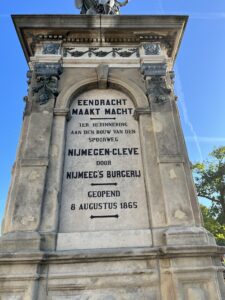
15 June 2022, and it is Day 2 of my very first #CrossBorderRail tour, and it is a gorgeous sunny morning in Nijmegen in Netherlands. I unfold the Birdy bike and cycle off towards the 6th border of the project at that stage, the dismantled line between Nijmegen and Kleve in Germany. There is even a monument to the building of the line in Nijmegen that I make sure to pass, and this line is one of the most famous cross border missing links, even being mentioned by Michael Cramer as one of the priorities to fix.
And then. Bam. Groesbeek. The railway line went through what is today the town square. It’s here on the map, and here is how it looks:
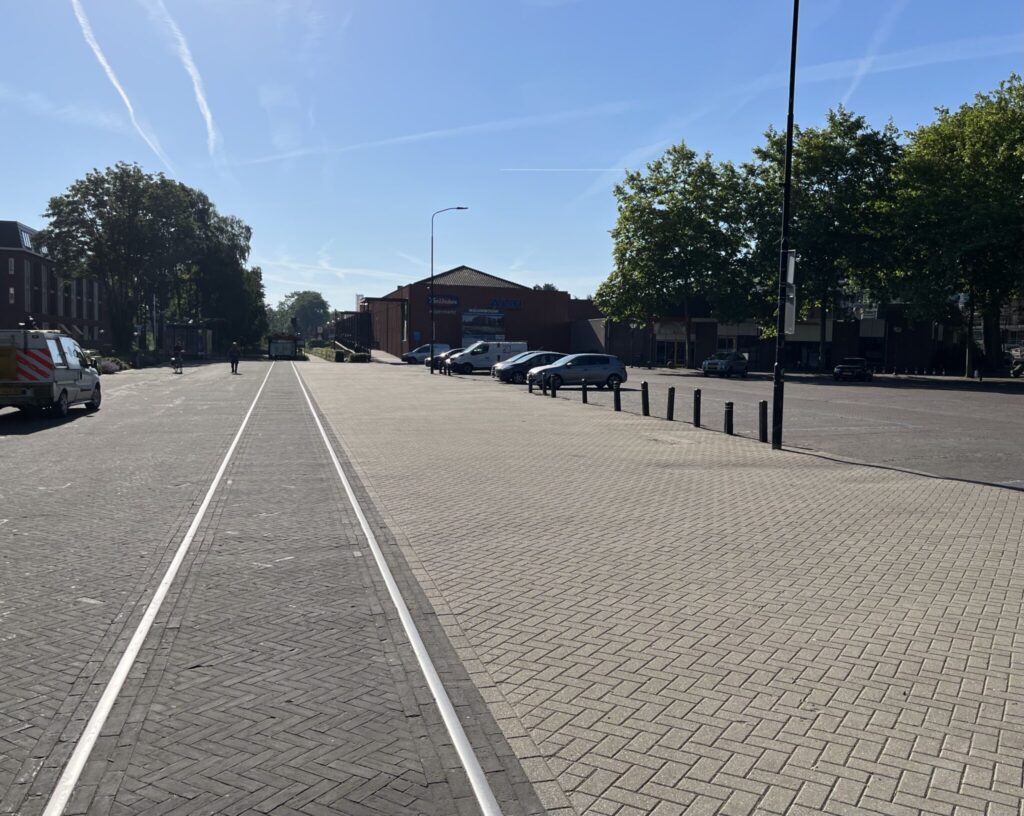
Not a charming square I grant you, but there is not a hope in hell you are going to run regular heavy rail trains through here again. So anyone wanting to re-open the Nijmegen to Kleve line has a big problem to solve – route around Groesbeek? Under it in a tunnel? Use a tram train instead?
I don’t know what the solution is, but I do know it is a lot harder than simply re-activating a closed railway.
Fast forward 15 months, and I am at the Czech-Slovak border in the village Střelná (it’s here), once again on my bike, but here there is a double track electrified railway crossing the border:
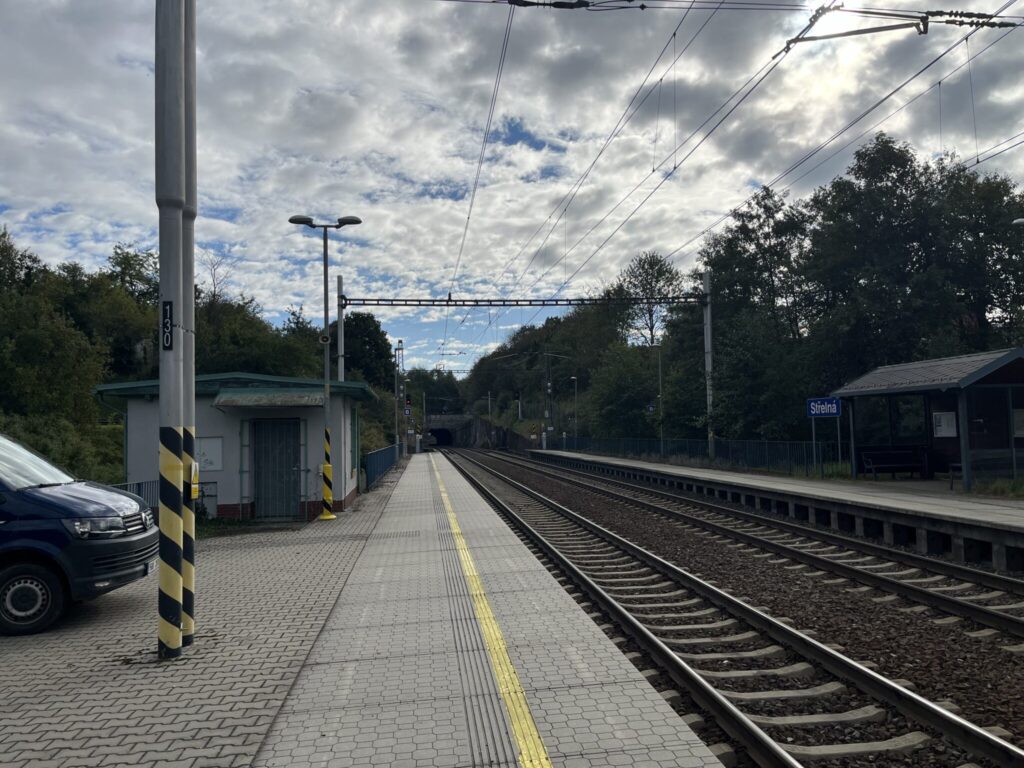
The problem was that the regional trains running in that region were not OKed to cross from Czechia into Slovakia, meaning the inhabitants of Střelná had no way to the other side of the border.
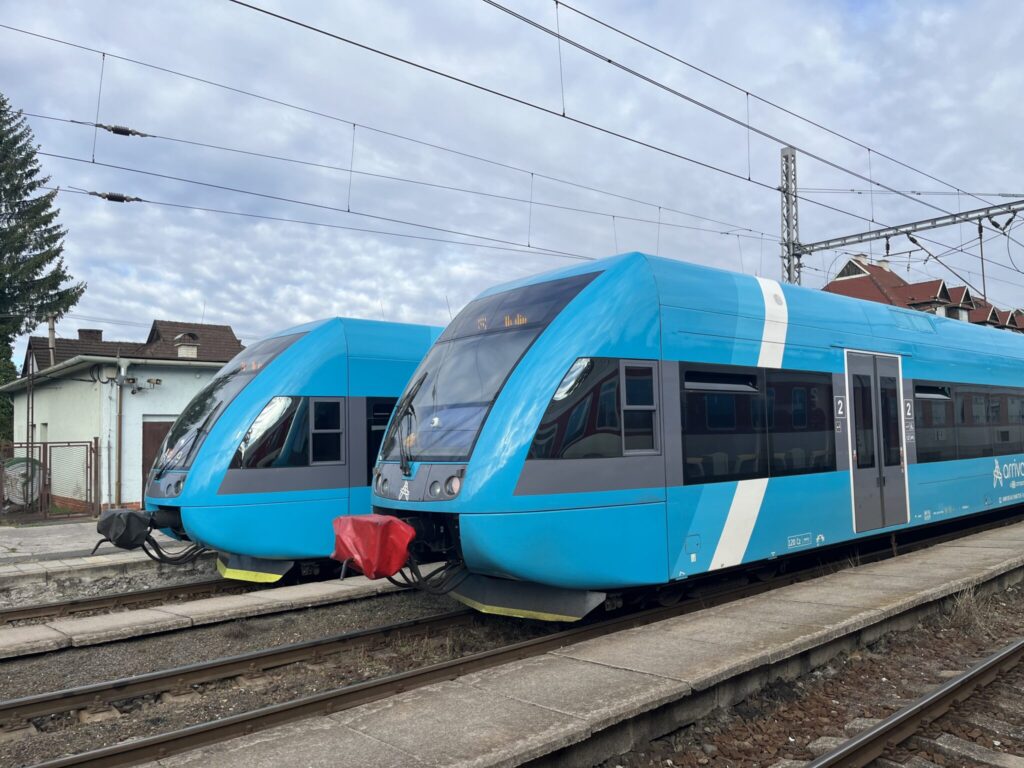
The simple although slightly sub-optimal solution found the following year was to run the older Slovak railbuses across the border to Czechia instead. But the problem is solved, the trains run, and it is a cross border rail success story.
And with those two stories I have the #CrossBorderRail method: I want to find more places like Střelná where fixes are swift and possible, and to draw attention to those, and leave solving much more complex problems like Groesbeek to others.
Here on the #CrossBorderRail website I have documented some of what I have found so far and have categorized the border lines I see as the priorities to fix – missing infrastructure, missing service, poor service and ticketing or other problem. I have also mapped all of Europe’s railway borders here on uMap.
So as I this week embark on the last big tour of this project, this is what I am looking for: borders where cross border traffic can be simply and easily improved. Somewhere in amongst the at least 82 borders I intend to examine this time there will be some gems, and there will be other places where the railways are long gone and never to return. And once I am back at my desk on 6th August I promise more systematic write-ups of what I have discovered will be written up!
But for now follow the journey – here’s the guide as to where posts en route can be found on social media!